AI-generated (“vibe coded”) mobile apps can be built in hours but often lack basic security controls like encryption, secure storage and compliance requirements. This blog series outlines the process I went through building my own app capturing key observations and lessons useful for those of us using AI for personal and business use.
I am not alone. In fact, App Store submissions surged 84% year over year in Q1 2026, driven largely by AI-assisted development. Apple began cracking down by blocking and removing some apps that violate rules around dynamic code execution because it requires apps to remain self contained and predictable.
Despite Apple’s attempts, more apps are getting built, and more risk is slipping through. This blog series breaks down what actually happens when you vibe code a mobile app based on my experience, offering perspective regarding the risks I encountered and offers effective mobile app risk management strategies including best practices for mobile application security testing.
The Vision
I built PanoPrompt to solve a personal problem: I needed one prompt to hit four AI platforms (GPT-4, Claude, Gemini and Perplexity) simultaneously and return a consolidated result.
Using the Replit AI Platform, I “vibed” the mobile app into existence — a clear example of AI-generated mobile app development. Replit handled everything behind the scenes, using React Native to produce the web, iOS and Android app builds.
PanoPrompt: A professional-grade UI built entirely through natural language “vibing.”
The Shadow IT Risk Created by AI Vibing
Vibe coding delivers speed but also introduces mobile app security risk and shadow AI exposure that most organizations don’t yet control.
These apps prioritize working code over protected code. Most vibe coders focus on solving a problem quickly; security, privacy and compliance rarely enter the initial prompt.
The Mirage of Security
Within four hours, I had a working app. I felt good. It was fast and easy.
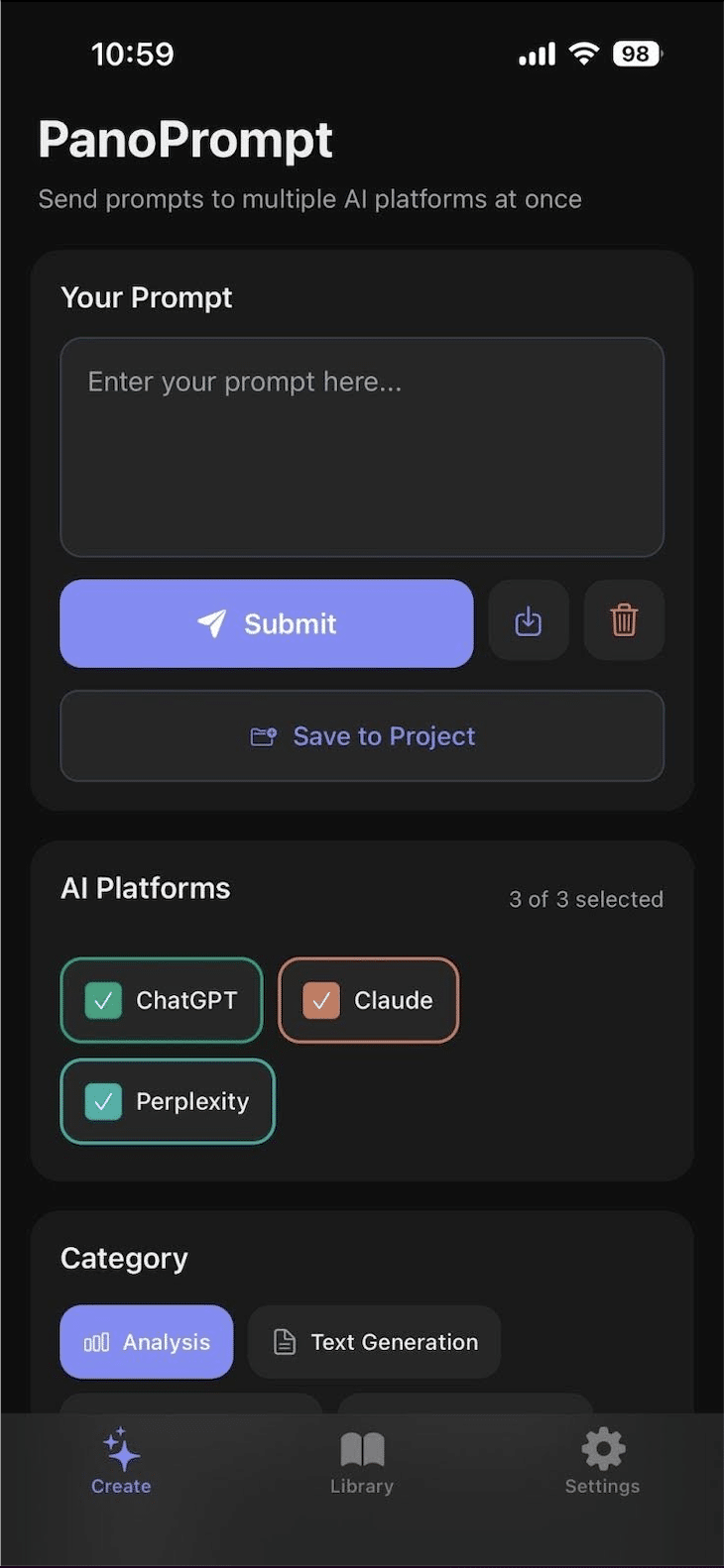
But beneath the surface, gaps showed up quickly. The vibe coding process suggested useful and functional improvements but never surfaced secure coding best practices for DevSecOps.
I had to specifically request:
- Authentication to protect API keys tied to funds
- Privacy policy and data usage disclosures for app store approval
- Security tooling to find and remediate issues
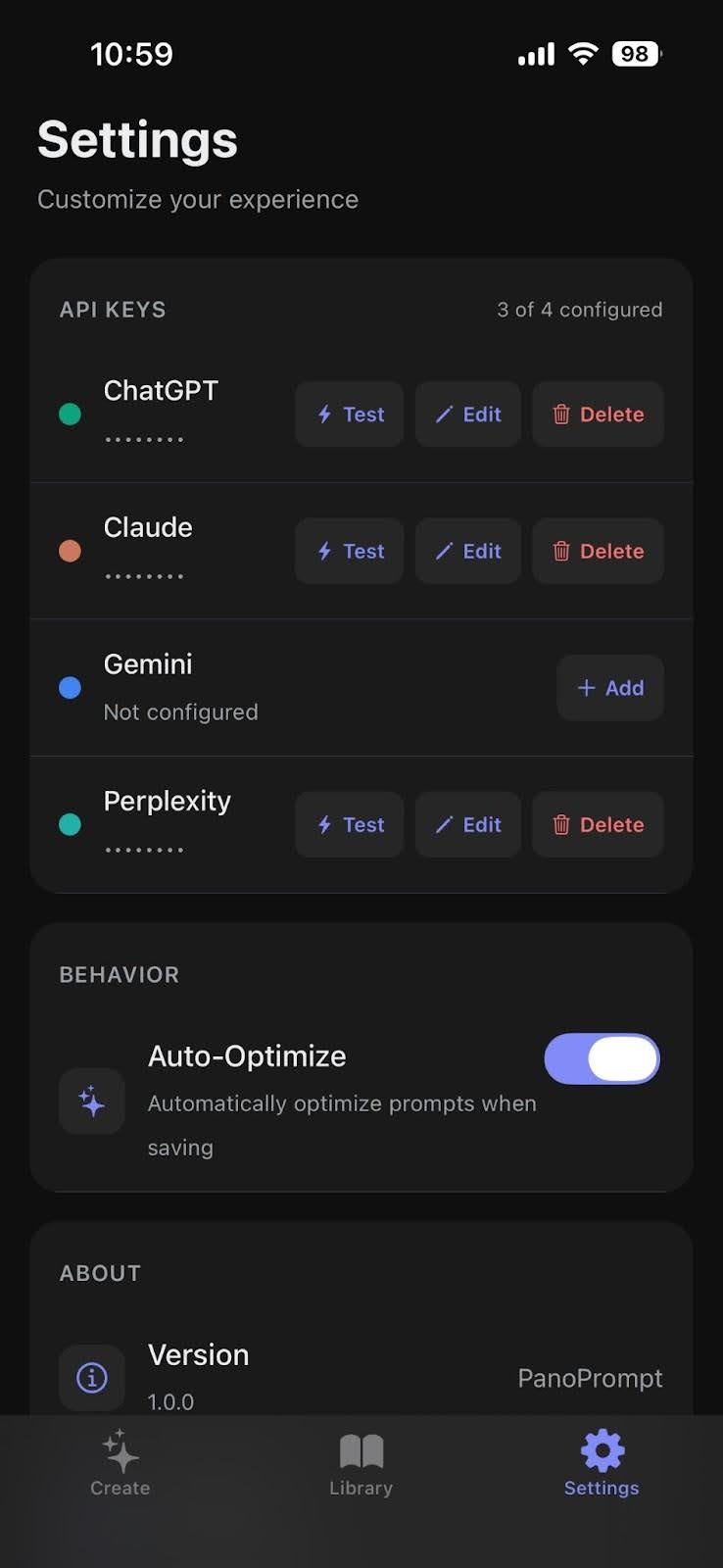
PanoPrompt handles sensitive prompt data and connects to multiple AI platforms. It also manages API keys tied to financial access. This combination demands strong mobile app security, compliance alignment and user trust.
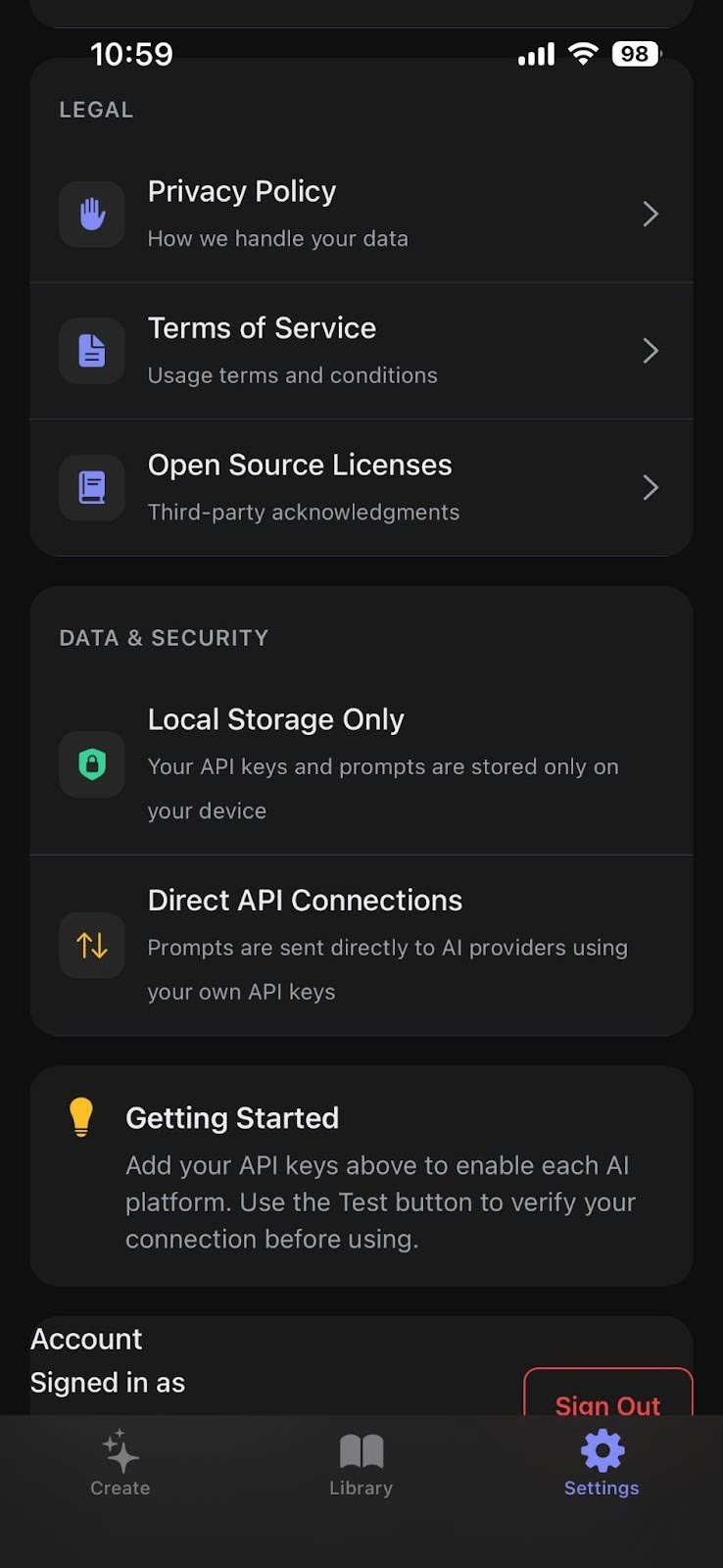
The UI suggested privacy but the underlying code remained unverified.
- Most vibe coders wouldn’t know these requirements determine whether an app asses app store review
- Protects user data
- Meets regulatory expectations
Once I specified requirements the updates came quickly and looked polished. Were the changes correct and were they high quality? Still unclear. Without visibility into generated code, trust becomes the default.
Vibe coding makes it easy to build an app but it doesn’t make it secure.
Mobile App Security Testing for AI-Generated Apps
I approached the build with security and privacy in mind. My initial prompt included: “secure development practices and all available security testing tools to ensure security and privacy.”
During final review, I used Replit’s built-in tools:
- Dependency Audit — identifies known vulnerabilities in packages
- SAST (Static Application Security Testing) — detects hardcoded secrets and insecure patterns
- HoundDog Privacy/Security Scanner — flags sensitive data exposure and insecure flows
After generating iOS and Android binaries, I ran PanoPrompt through NowSecure Platform mobile application security testing solution for deeper analysis.
The 25/100 Reality Check
Using mobile app security testing (SAST, dependency analysis and dynamic testing), the app scored 25/100 on both iOS and Android.
My first reaction: relief.
AI-generated apps don’t magically produce secure software — and they won’t replace mobile AppSec expertise anytime soon.
The result made sense:
- Mobile app security is highly specialized
- Web-focused tools miss mobile-specific risks
- Training data rarely reflects secure mobile implementations
Like traditional development, AI-generated vibe-coded mobile apps struggle without explicit security and privacy validation and DevSecOps testing.
The Vulnerabilities
The app exposed several critical issues:
- Cleartext network traffic
- Unencrypted storage of PII and API keys
- Missing compliance elements:
- Privacy manifest
- API declarations
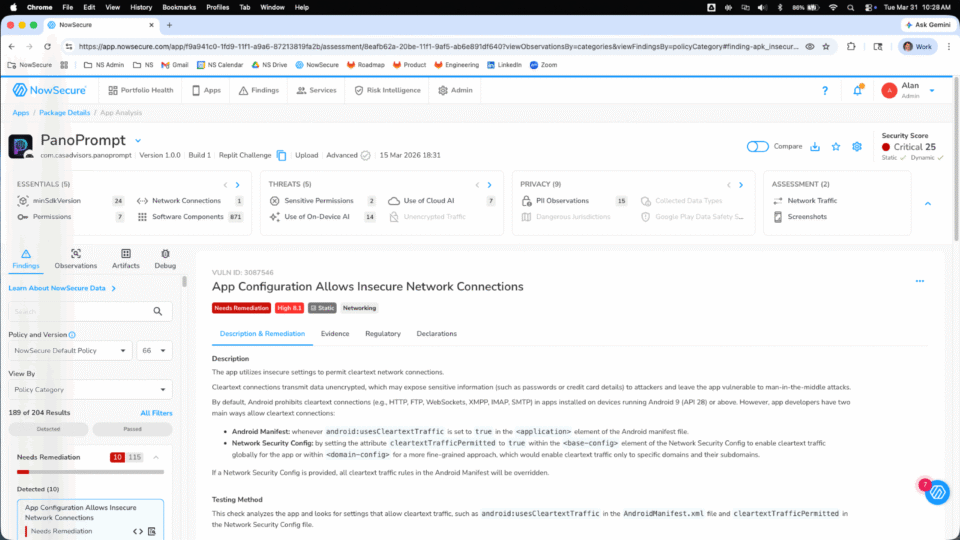
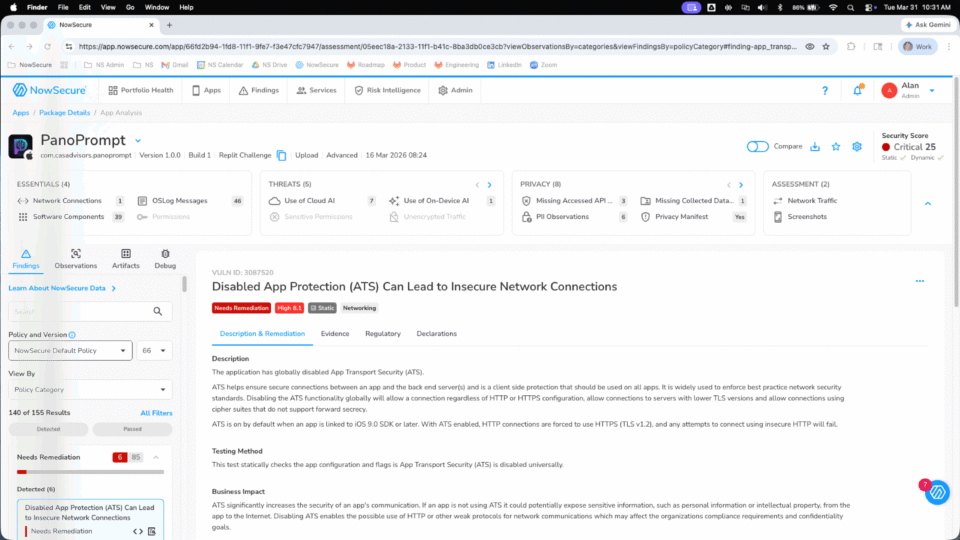
These represent serious mobile app vulnerabilities — and in some cases, app store blockers.
FAQs: Security Risks in AI-Generated Mobile Apps
What are the security risks in AI-generated mobile apps?
AI-generated mobile apps often miss basic security controls like encryption, secure storage and proper authentication. They may expose sensitive data, allow insecure network connections or store API keys and personal data without protection. Many also lack the compliance elements required for app store approval.
Why are app stores cracking down on AI-generated apps?
App stores like Apple require apps to remain self-contained and predictable. Many AI-generated apps dynamically execute or generate code after review, which conflicts with those rules. That behavior also introduces security and privacy risks, which leads to stricter enforcement and rejected submissions.
Do AI coding tools create secure mobile apps?
AI coding tools speed up development, but they don’t reliably apply secure coding practices, especially for mobile environments. Without dedicated mobile app security testing, vulnerabilities often remain in the final app.
How should teams secure AI-generated mobile apps?
Teams should treat AI-generated apps the same as any production software. That includes conducting mobile application security testing, validating data storage and network behavior and aligning with standards like OWASP MASVS before release.
The Lesson
AI accelerates development but it doesn’t replace security expertise. Vibe coding lowers the barrier to building apps. It doesn’t reduce the risk.
Ease of creation ≠ security of the result.
AI-generated mobile apps demand the same rigorous security testing as traditionally developed apps.
My advice: Vibe and verify!
Security Now Determines What Ships
Apple’s crackdown on vibe coding highlights a bigger shift.
AI speeds up how apps get built and increases volume. App stores tighten what they allow. Security gaps no longer sit in a report, they can stop apps from shipping. s
For teams building with AI, that changes the equation. Mobile AppSec and privacy now act as gatekeepers for distribution, not simply a best practice.
In the next installment, find out what happened when the NowSecure analysis entered the vibe coding process!
Read part 2 of the series Vibe Coding Risk: Securing AI-Generated Mobile Apps.