
NowSecure Privacy
Stop Privacy Leaks Before They Become Breaches
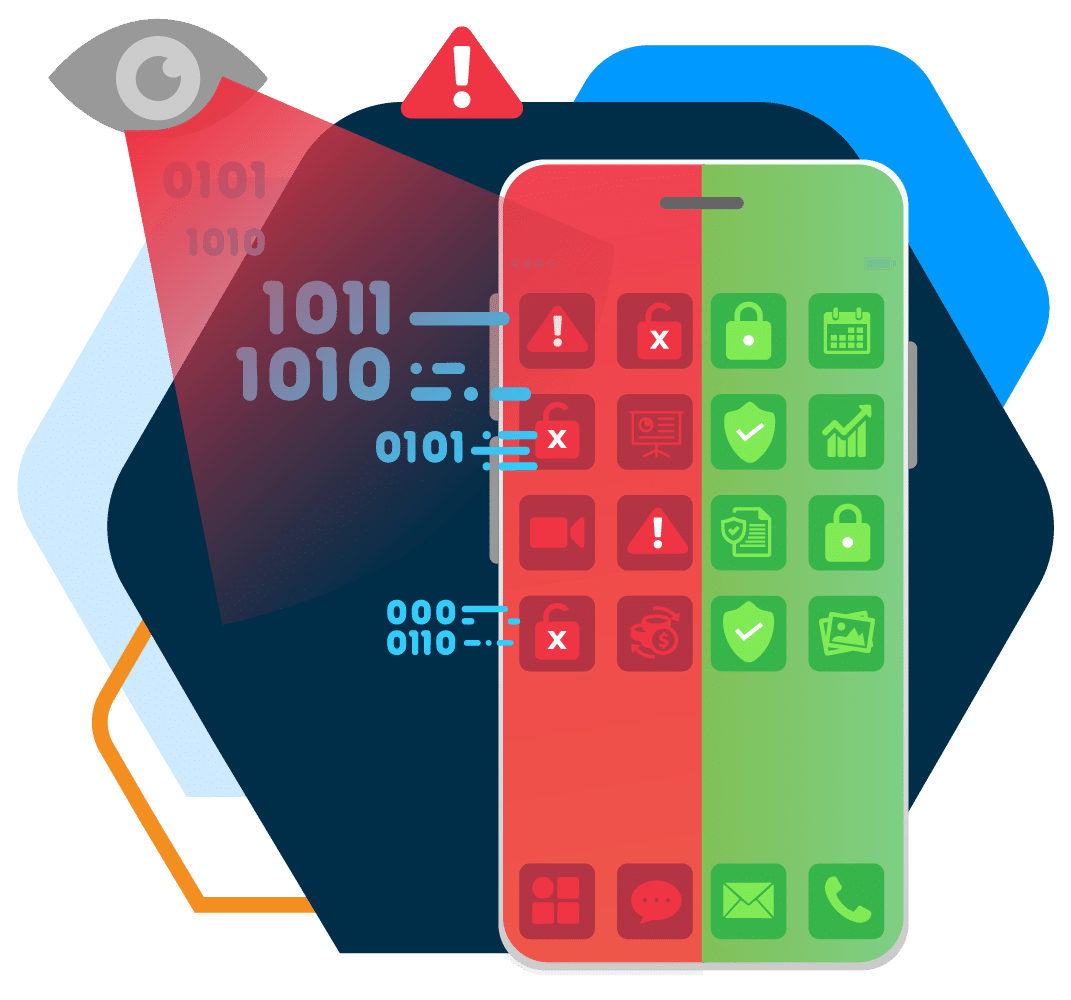
NowSecure Privacy is the industry’s first solution that automates testing and orchestrates remediation, to stop privacy leaks from mobile apps before they become breaches.
Privacy violations such as overreaching data access, third-party tracking, or un-consented information sharing result in regulatory fines, costly settlements, and reputational damage. NowSecure Privacy protects sensitive data, minimizes compliance exposure, and maintains trust.
Eliminate Hidden Risks
- hidden data leaks
- unsafe SDKs
- excessive permissions
- misleading declarations
- unwanted tracking domains
- misuse of artificial intelligence (AI)
- unauthorized data sharing
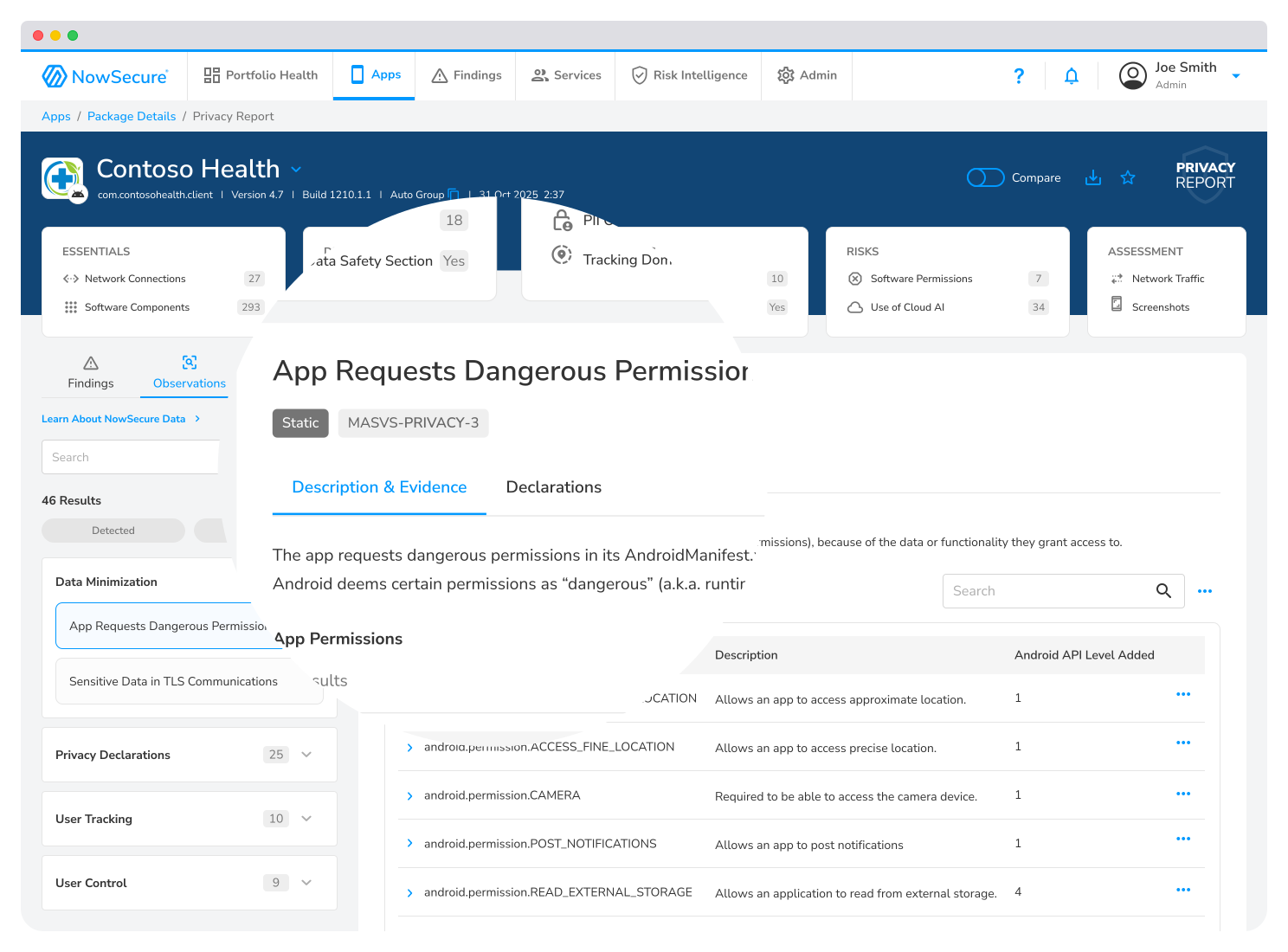
Automated Privacy Risk Management
Progressive Testing
Business impact, Exposure, Priority
Remediation
Integration with DevSecOps, AppSec, End User Computing and Privacy team workflows for continuous assurance
Regulatory & Audit reporting
GDPR, HIPAA, PCI, CCPA, COPPA, U.S. state laws, and OWASP MASVS Privacy standards
Benefits
Faster Audit Readiness – What used to take weeks now takes less than an hour. Auto-generated reports mean 90% faster compliance checks.
Operational Efficiency Gains – No more 100+ hours of manual work.
Continuous Privacy Testing – Stop guessing. Every app, every release, fully covered.
Accelerated Time-to-Market – Weeks-long compliance delays? Gone. Apps ship faster, unlocking new sources of revenue.
Protect Brand Trust – One hidden leak can wreck a reputation. Early detection keeps customer data safe and avoids industry estimated impact of $5–10M per breach and expensive lawsuits, settlements and fines.
Executive-Ready Reporting – Clear, regulator-ready reports. Easy to share with executives, auditors, and regulators, with proof mapped to global standards.
Legacy approaches to privacy protection are not enough in a mobile-first world
As mobile apps collect more user data and interact with a vast ecosystem of SDKs and APIs, traditional security testing is no longer enough. NowSecure gives organizations a clear path to understand and mitigate privacy risk, ensuring compliance and reinforcing brand trust in a mobile-first world

Mobile App Privacy FAQs
What is mobile app privacy?
Mobile app privacy is the protection and responsible handling of personal, sensitive, and device data collected, processed, stored, or shared by mobile applications.
At NowSecure, we view mobile privacy as a critical component of mobile app security because apps routinely access sensitive information such as location, contacts, health data, financial details, identifiers, and behavioral analytics. Privacy protection requires transparency into what data an app collects, how it is transmitted, which third parties receive it, and whether those practices align with user consent, regulatory requirements, and app store policies.
Effective mobile privacy programs help organizations reduce legal, operational, and reputational risk while maintaining user trust. Continuous mobile privacy testing enables organizations to identify excessive permissions, hidden data sharing, insecure SDK behaviors, and policy violations across iOS and Android applications before apps are released or submitted to app stores.
What are key mobile app privacy risks?
Key mobile app privacy risks include excessive data collection, unauthorized data sharing, insecure storage of personal information, weak encryption, tracking through third-party SDKs, and exposure of sensitive data through APIs or network communications.
At NowSecure, we frequently identify privacy risks involving location tracking, device fingerprinting, analytics libraries, advertising SDKs, and overprivileged applications requesting unnecessary permissions. Many apps unintentionally expose personally identifiable information (PII), healthcare records, credentials, or behavioral data through insecure transmissions or backend integrations.
Privacy risks also arise when app disclosures do not accurately reflect actual runtime behaviors, creating compliance issues with GDPR, CCPA, HIPAA, Apple privacy manifests, or Google Play Data Safety requirements. Because privacy violations can damage customer trust and trigger regulatory penalties, organizations should continuously test mobile apps and third-party components before every release.
How can users protect their privacy on mobile apps?
Users can improve mobile privacy by carefully reviewing app permissions, limiting unnecessary data access, and downloading apps only from trusted developers and official app stores.
At NowSecure, we recommend denying permissions that are not essential to app functionality, such as location, microphone, camera, contacts, or background tracking when unnecessary. Users should also review privacy disclosures, disable excessive data sharing options, and keep mobile operating systems and applications updated to reduce exposure to known vulnerabilities.
Monitoring app behavior and uninstalling apps that request excessive permissions or demonstrate suspicious activity can further reduce risk. Enterprise users should follow organizational mobile security policies and use trusted mobile threat defense solutions when appropriate.
Because third-party SDKs and hidden trackers may still collect data unexpectedly, ongoing awareness and cautious permission management remain important safeguards for protecting mobile privacy.
What do developers need to know about mobile app privacy?
Developers must understand that mobile privacy extends beyond compliance checklists and includes how applications, APIs, and third-party SDKs actually collect, process, store, and transmit user data during runtime.
At NowSecure, we recommend adopting privacy-by-design principles throughout the software development lifecycle, including minimizing unnecessary data collection, restricting permissions, encrypting sensitive information, and validating all third-party components for privacy risk. Developers should ensure privacy disclosures accurately reflect real application behavior and continuously test apps against GDPR, CCPA, HIPAA, Apple privacy manifests, and Google Play Data Safety requirements.
Runtime privacy testing is especially important because hidden SDK behaviors, insecure APIs, or analytics libraries may expose sensitive data unexpectedly. Integrating automated privacy testing into CI/CD pipelines helps developers identify issues earlier, reduce compliance risk, and deliver more trustworthy mobile experiences across iOS and Android applications.
What is the ROI of automating mobile privacy testing in CI/CD?
Automating mobile privacy testing in CI/CD improves return on investment by identifying privacy risks earlier, reducing remediation costs, accelerating release cycles, and lowering compliance exposure.
At NowSecure, we believe continuous automated testing enables organizations to detect excessive permissions, unauthorized data sharing, insecure SDK behaviors, and policy violations before applications reach production or app store review.
Early detection prevents expensive late-stage fixes, audit failures, app rejections, and reputational damage associated with privacy incidents. Automated privacy validation also reduces manual review effort while helping security and development teams maintain consistent compliance with GDPR, CCPA, HIPAA, Apple privacy manifests, and Google Play Data Safety disclosures.
Integrating privacy testing directly into DevSecOps workflows improves operational efficiency and provides ongoing visibility into evolving mobile privacy risk without slowing agile development or release velocity across iOS and Android environments.
How can I control or limit what data the app collects — what permissions should I grant or deny?
Users should grant only the permissions necessary for an app’s core functionality and deny access to sensitive data that is not clearly required.
At NowSecure, we recommend carefully reviewing requests for location, camera, microphone, contacts, SMS, Bluetooth, photos, and background activity because these permissions can expose personal or enterprise data unnecessarily. Apps should follow the principle of least privilege, meaning they request only the minimum permissions needed to operate.
Users should also periodically review existing app permissions and disable access when features are no longer needed. Privacy-conscious organizations may implement mobile device management or enterprise mobility policies to restrict high-risk permissions across managed devices. Because third-party SDKs and analytics tools may also collect information, users and security teams should validate app behavior continuously to ensure actual data collection aligns with privacy disclosures and organizational policies.
How do I prove a mobile app meets privacy requirements before an audit or app store submission?
Organizations can demonstrate mobile privacy compliance by performing continuous privacy testing, validating runtime behaviors, documenting data flows, and maintaining evidence that app disclosures accurately reflect application activity.
At NowSecure, we recommend automated privacy analysis that identifies excessive permissions, insecure data handling, unauthorized tracking, third-party SDK risks, and policy violations before app store submission or regulatory audits. Testing should validate compliance against GDPR, CCPA, HIPAA, Apple privacy manifests, and Google Play Data Safety requirements while confirming encryption, consent handling, and secure data transmission practices.
Detailed reporting and remediation tracking help provide auditors and app store reviewers with verifiable evidence of privacy controls. Continuous testing within CI/CD pipelines also demonstrates that privacy validation is integrated into the software development lifecycle rather than treated as a one-time assessment before release.
Can NowSecure validate Apple privacy manifest and Google Play data safety disclosures?
Yes. NowSecure helps organizations validate whether actual mobile app behaviors align with Apple privacy manifests and Google Play Data Safety disclosures.
Automated runtime privacy testing identifies the types of data an app and its third-party SDKs collect, process, transmit, or share during execution across iOS and Android environments. This visibility helps organizations detect discrepancies between declared privacy disclosures and real application activity, including hidden tracking behaviors, excessive permissions, or unauthorized data sharing.
Continuous testing also supports compliance with evolving app store requirements and privacy regulations by identifying risks before submission or release.
By validating both first-party and third-party component behavior, NowSecure helps development and security teams improve transparency, reduce app rejection risk, and maintain stronger confidence that mobile applications accurately represent their privacy practices to users and regulators.
What should developers check before shipping a mobile app to avoid privacy compliance issues?
Before release, developers should validate that the app collects only necessary data, uses least-privilege permissions, encrypts sensitive information, and accurately discloses all data collection and sharing practices.
At NowSecure, we recommend testing mobile apps, APIs, and third-party SDKs for unauthorized tracking, insecure data transmission, privacy leaks, and discrepancies between runtime behavior and published disclosures. Developers should verify compliance with GDPR, CCPA, HIPAA, Apple privacy manifests, and Google Play Data Safety requirements while confirming that analytics, advertising, and SDK integrations do not introduce hidden privacy risks.
Testing should also validate user consent mechanisms, secure authentication, and proper handling of personal information. Integrating automated privacy testing into CI/CD pipelines allows organizations to continuously identify compliance issues before release, reducing the likelihood of app store rejection, regulatory penalties, or reputational damage.
How can security teams reduce mobile app privacy risk before each release?
Security teams can reduce mobile app privacy risk by integrating automated privacy testing into every stage of the development and release process.
At NowSecure, we recommend continuously validating iOS and Android applications, APIs, backend services, and third-party SDKs for excessive permissions, insecure data handling, unauthorized tracking, and hidden data sharing behaviors. Runtime analysis is especially important because many privacy risks only appear during application execution.
Teams should also verify compliance with GDPR, CCPA, HIPAA, Apple privacy manifests, and Google Play Data Safety disclosures before release. Risk-based prioritization, rapid remediation workflows, and recurring testing after SDK or feature changes help organizations maintain stronger privacy controls while preserving release velocity.
Continuous privacy validation within CI/CD pipelines provides ongoing visibility into evolving risks and helps prevent compliance failures, app store rejection, or reputational harm.
What are the top mobile app privacy risks we should test for before release?
Before release, organizations should test for excessive permissions, insecure data storage, unauthorized tracking, insecure network communications, API data leaks, weak encryption, and hidden third-party SDK behaviors.
At NowSecure, we frequently identify privacy risks involving analytics libraries, advertising SDKs, device fingerprinting, location tracking, and unauthorized transmission of personally identifiable information (PII). Security teams should also validate whether runtime app behavior matches Apple privacy manifests and Google Play Data Safety disclosures.
Additional testing should assess consent handling, authentication protections, data retention practices, and software supply chain exposure from embedded components. Many privacy issues emerge only during runtime, making dynamic analysis critical for identifying hidden data sharing and insecure transmissions.
Continuous testing helps organizations reduce regulatory, operational, and reputational risk while improving compliance with GDPR, CCPA, HIPAA, and internal privacy requirements.
How do we verify that a mobile app complies with GDPR, CCPA, HIPAA, or internal privacy requirements?
Organizations can verify compliance by continuously testing mobile applications, APIs, backend services, and third-party SDKs against regulatory and internal privacy requirements throughout the software lifecycle.
At NowSecure, we recommend validating runtime behaviors to confirm that applications collect, store, process, and transmit data in ways consistent with GDPR, CCPA, HIPAA, and enterprise privacy policies. Testing should identify excessive permissions, insecure data handling, unauthorized sharing, weak encryption, tracking behaviors, and discrepancies between actual app activity and published disclosures.
Continuous automated privacy analysis within CI/CD pipelines helps organizations maintain ongoing compliance as apps evolve through new releases and SDK updates. Detailed reporting, remediation tracking, and runtime evidence also support audit readiness and app store submissions.
Combining automated and expert-led assessments provides stronger assurance that mobile apps meet both regulatory obligations and organizational privacy expectations.