Meet us at Black Hat 2026

See what senior security leaders across finance, healthcare, high tech and retail report, how their answers compared to AI model predictions, and the strategic recommendations you need to close the gap.

2026 Mobile App Risk Management Survey promo image
New: AI-native capabilities built for the speed and risk of AI-driven app development. New: AI-native capabilities built for the speed and risk of AI-driven app development. Learn More.
magnifying glass icon

MOBILE Application SECURITY TESTING

Testing That Proves Security Risk in Mobile Apps

Mobile applications create unique security challenges that require specialized testing.

NowSecure Mobile App Security Testing combines automated analysis and expert testing to identify risks across binaries, APIs, runtime behavior, and third-party components.

Frame 2147238814

Mobile App Security Testing (MAST) identifies security risks in mobile applications by analyzing the application itself, including binaries, APIs, runtime behavior, data flows, third- party components, and emerging AI-enabled functionality.

Unlike traditional application security testing approaches that focus primarily on source code, MAST evaluates the mobile applications users install and run across iOS and Android.

NowSecure combines automated analysis, expert security testing, and mobile expertise to help teams identify, validate, and address security risks before applications reach users.

Definition

What Is Mobile App Security Testing?

Mobile App Security Testing (MAST) evaluates the security of mobile applications by analyzing how applications are built, how they behave, and how they protect sensitive information.

Unlike traditional application security approaches designed primarily around source code, MAST examines the complete mobile application, including compiled binaries, APIs, runtime behavior, data handling, and embedded components.

Mobile applications have unique security challenges because they operate on user-controlled devices, communicate with external services, and often include third-party SDKs and libraries.

A comprehensive MAST approach helps organizations:

document search

Identify vulnerabilities and security weaknesses before release

settings

Validate application security controls

target

Detect risks introduced by third-party components

double checkmark

Support secure mobile development and release processes

The Mobile Attack Surface

Why Mobile Applications Require Specialized Security Testing

Mobile applications are fundamentally different from traditional web applications. They run on user-controlled devices, expose application binaries, communicate with APIs, and often include third-party components that introduce additional security considerations.

These characteristics create a unique mobile attack surface that requires specialized testing approaches designed for iOS and Android applications.

Mobile Applications Introduce Unique Security Challenges

Effective mobile application security testing must evaluate:

Mobile Applications Introduce Unique Security Challengesh
Security Dimension What Testing Must Evaluate
Application binaries The compiled application users install and run.
APIs and data flows How applications communicate and protect sensitive information.
Runtime behavior How applications operate when executed on real devices.
Third-party components How embedded SDKs and libraries impact application security.
AI-enabled functionality How AI features, models and intelligent services introduce new application behaviors, data flows and security considerations.
Device-level considerations How applications interact with the mobile operating system and device environment.
Warning

Unlike traditional application security approaches that focus primarily on source code or server-side components, Mobile App Security Testing evaluates the complete mobile application experience, including the application itself, its supporting services, embedded components, and emerging capabilities such as AI-powered functionality.

Real-World Application

Test the Application Users Actually Run

Mobile application security depends on understanding the application as it exists in the real world, not only how it was developed.

Mobile applications can change throughout the development process through compilation, configuration changes, third-party integrations, and embedded components. Increasingly, these changes also include AI-powered features, external AI services, and new data interactions introduced through intelligent application capabilities. The final application installed by users represents the complete security surface that must be evaluated.

NowSecure analyzes mobile applications as they are delivered to users, providing visibility into:

NowSecure analyzes mobile applications as they are delivered to users, providing visibility into:
Area of Visibility What NowSecure Analyzes
Compiled application binaries Identify security issues within the application users install.
Application behavior and runtime activity Evaluate how the application operates during execution, including security-sensitive behaviors.
APIs and communication flows Analyze how applications connect to services and protect data in transit.
Embedded components and SDKs Identify risks introduced by third-party libraries, frameworks and software components.
Warning

By testing the complete mobile application environment, NowSecure helps security and development teams identify, validate, and address risks that may not be visible through traditional testing approaches alone.

Methodology

Comprehensive Mobile Application Security Testing Methods

Mobile applications require multiple testing approaches to identify security risks throughout the application lifecycle. NowSecure combines automated analysis, expert security testing, and mobile expertise to provide deeper visibility into application security across iOS and Android.

Comprehensive Mobile Application Security Testing Methods
Testing Method Description
Automated Mobile Application Security Testing Continuously analyze applications for security weaknesses, vulnerabilities, insecure configurations and mobile-specific risks..
Dynamic and Runtime Testing Evaluate applications during execution to identify security issues related to application behavior, data exposure and communication flows. This is especially important for AI-enabled applications where new behaviors, data flows and external service interactions may be introduced during runtime.
Expert Mobile Security Testing Apply specialized mobile security expertise to uncover complex vulnerabilities and attack paths that require deeper analysis.
Third-Party Component Analysts Analyze embedded SDKs, libraries and software dependencies to identify risks introduced through the mobile application supply chain.
Continuous Security Testing Integrate mobile security testing into development workflows to help teams identify and address issues throughout the application lifecycle.

Risk Coverage

Security Risks Identified Through Mobile App Security Testing

Mobile applications introduce security risks across code, configurations, data handling, communications, and third-party components. Comprehensive Mobile App Security Testing helps teams identify and address weaknesses before they impact users or the business.

NowSecure evaluates mobile applications for risks including:

NowSecure evaluates mobile applications for risks
Risk Category What NowSecure Evaluates
Data Projection and Privacy Risks Identify insecure data storage, sensitive information exposure and privacy issues withing mobile applications. This includes evaluating how AI-enabled features access, process and transmit sensitive information.
Authentification and Access Control Weakness Evaluate authentication flows, session management and authorization controls for security gaps..
Application and API Security Issues Analyze application logic, API communications and security controls that protect application functionality and data.
Cryptographic and Configuration Weaknesses Identify improper cryptographic implementations, exposed secrets and insecure configurations.
Third-Party SDK and Software Supply Chain Risks Detect vulnerabilities and security concerns introduced through embedded libraries, frameworks and third-party components. This includes third-party AI services, frameworks and embedded components that may influence application behavior.
Runtime and Behavioral Risks Identify security issues that appear only when applications execute, interact with devices or communicate with external services.

The State of Mobile App Security

AI and third-party code now make up most of the modern mobile app, and they’re changing where mobile risk comes from. NowSecure CEO Alan Snyder reviews the full findings and what they mean for your program.

DevSecOps

Mobile Security Testing in DevSecOps

Mobile applications are developed and released at a pace that requires security testing to become part of the development lifecycle. Waiting until the end of the release process to evaluate security can delay delivery, increase remediation costs, and allow security issues to move closer to production.

Mobile App Security Testing helps security and development teams continuously evaluate mobile applications throughout development, testing, and release. NowSecure integrates automated analysis, expert security testing, and actionable findings into modern mobile development workflows so teams can identify risks earlier and make informed security decisions throughout the application lifecycle.

How Does Mobile App Security Testing Support DevSecOps?

Mobile security testing supports DevSecOps by bringing specialized mobile application analysis into existing development processes.

Unlike traditional security testing approaches that may occur after development is complete, MAST provides security visibility throughout the mobile application lifecycle. This helps teams:

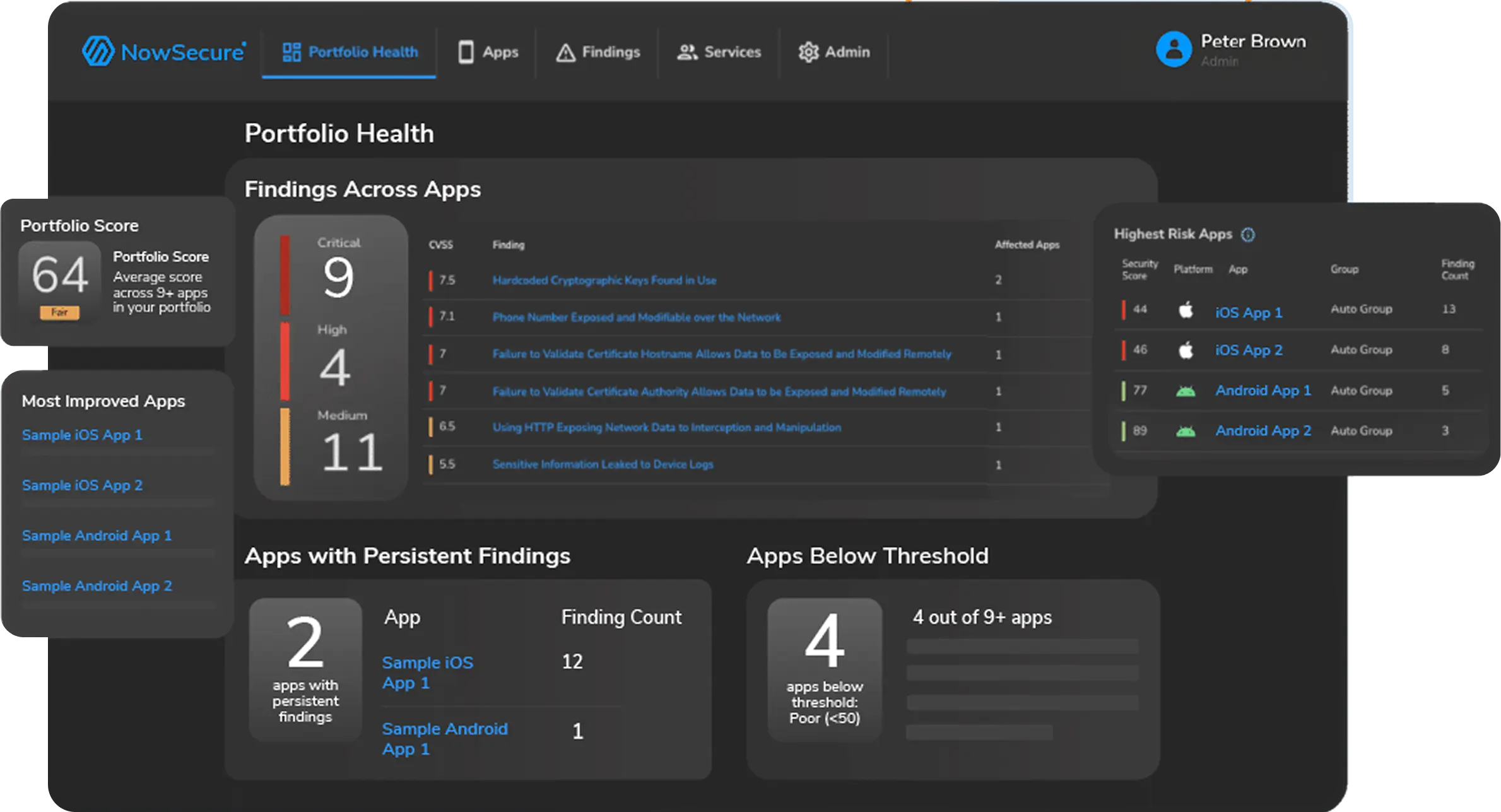
Business impact tiers, data types, and recommended mobile app risk management approach
Capability Description
Identify Security Risks Earlier Evaluate applications during development and release cycles to identify vulnerabilities and security weaknesses before they impact production.
Provide Actionable Findings for Developers Deliver security findings with the context teams need to understand the issue, prioritize remediation and improve application security.
Validate Security Improvements Confirm that security issues have been addressed as applications evolve through new versions and releases.
Support Automated Development Workflows Integrate mobile security testing into CI/CD processes to help teams maintain security checks without slowing application delivery.

Secure Mobile Development Without Slowing Releases

How Does MAST Improve Mobile Application Release Security?

Mobile applications frequently change after initial development through new features, updated dependencies, configuration changes, and third-party integrations. This increasingly includes AI-enabled features and services that can introduce new application behaviors and security considerations. Each release can introduce new security considerations.

Continuous Mobile App Security Testing helps teams validate:

columns-plus-right

New application builds

hand withdraw

Updated functionality

settings

Changed security controls

download simple

Third-party component updates

git diff

Application behavior changes

Warning

By testing throughout the release process, teams gain greater confidence that mobile applications meet security expectations before reaching users.

Integrating Mobile Security Testing Into the Development Lifecycle

Plan

Develop

Build Mobile Application

Automated Security Testing

Expert Analysis

1

2

3

4

5

Why MAST Testing Matters for Mobile Security Teams

Mobile applications introduce risks that are difficult to evaluate through generic application security workflows alone.

A DevSecOps approach for mobile requires visibility into:

The compiled application artifact

Runtime application behavior

APIs and data flows

APIs and data flows

Security controls implemented throughout development

Warning

NowSecure helps teams incorporate this specialized mobile security analysis into the workflows they already use to build and release applications.

Software Supply Chain

Third-Party SDK and Software Supply Chain Testing

Modern mobile applications rely on third-party SDKs, libraries, and frameworks to deliver functionality such as analytics, payments, authentication, advertising, and AI-powered features and external AI services.

These components accelerate development but can also introduce security, privacy, and software supply chain risks that are difficult to identify without specialized mobile application testing. Mobile App Security Testing evaluates embedded components within the application to understand how they impact the overall security posture.

Why Do Third-Party SDKs Create Mobile Security Risks?

Third-party components can introduce risk because they become part of the final mobile application delivered to users.

Third-party component analysis helps security teams understand:

columns-plus-right

Which SDKs and libraries exist inside an application

hand withdraw

Whether embedded components contain known vulnerabilities

settings

How third-party code accesses application data or device capabilities

download simple

Whether external dependencies introduce additional security exposure

How Does MAST Evaluate Third-Party Components?

NowSecure analyzes embedded SDKs, libraries, and dependencies to help teams identify:

Vulnerable or outdated components

Unexpected data access or application behavior

Security and privacy risks introduced through third-party code

Software supply chain exposure within mobile applications

Warning

By testing the complete mobile application, teams gain visibility into risks introduced by both internally developed code and external components included in the final application.

Emerging Risk

AI-Powered Mobile Application Security Testing

Artificial intelligence is changing how mobile applications are designed, developed, and delivered. AI-powered features can improve user experiences and accelerate innovation, but they also introduce new application behaviors, data flows, and dependencies that require specialized security testing.

Mobile applications increasingly incorporate AI capabilities, third-party AI services, and intelligent features that interact with sensitive data and application functionality. Mobile App Security Testing helps teams evaluate how AI-enabled functionality impacts the security of the application and the data it processes.

How Does AI Change Mobile Application Security?

AI introduces new application behaviors and data flows that can expand the mobile attack surface.

AI-enabled mobile applications may introduce risks related to:

columns-plus-right

Sensitive data access and exposure

hand withdraw

New communication paths between applications and AI services

settings

Third-party AI components and dependencies

download simple

Changes in application behavior introduced through AI functionality

download simple

Security controls around AI-enabled features

Warning

As AI becomes more embedded in mobile experiences, security teams need visibility into how these capabilities affect application security.

How Does MAST Evaluate AI-Enabled Applications?

Mobile App Security Testing helps teams assess AI-powered applications by analyzing the application environment, including:

AI-enabled application functionality

Data flows involving AI features

Third-party AI integrations

Security behaviors introduced through AI capabilities

Potential exposure of sensitive information

Warning

By evaluating AI-powered applications as part of the complete mobile security testing process, teams can identify emerging risks while continuing to deliver innovative mobile experiences.

How Does MAST Evaluate AI-Enabled Applications?

How Does MAST Evaluate AI-Enabled Applications?
Category Includes
Application Surface Mobile Application, AI Features, Data Access, Third-Party AI Services, APIs, User Interactions
Security Testing Focus Behavior Analysis, Data Flow Analysis, Component Analysis, Risk Identification

Frameworks

Built Around Mobile Security Standards

Mobile applications require specialized testing approaches and security standards designed specifically for mobile environments. NowSecure aligns Mobile App Security Testing with leading mobile security frameworks to help teams evaluate applications against established security requirements and best practices.

What Mobile Security Standards Does MAST Support?

NowSecure incorporates industry-recognized frameworks, including:

What Mobile Security Standards Does MAST Support?
Standard Description
OWASP Mobile Application Security Verification Standard (MASVS) Defines security requirements and controls for mobile applications, including data protection, authentication, cryptography, network communication and platform security.
OWASP Mobile Application Security Testing Guide (MASTG) Provides testing methodologies and techniques for identifying and validating mobile application security weaknesses.
Warning

By aligning testing with recognized mobile security standards, NowSecure helps security teams establish consistent testing practices, communicate findings, and validate application security.

The NowSecure Difference

Why Choose NowSecure for Mobile App Security Testing?

Mobile security requires specialized expertise. NowSecure was built specifically for mobile application security, combining automated analysis, expert testing, and deep mobile research to help organizations identify and validate security risks across iOS and Android applications.

Why Choose NowSecure for Mobile App Security Testing?
Differentiator Description
Purpose-Built Mobile Security Expertise Unlike general application security platforms, NowSecure focuses specifically on mobile applications and the unique risks introduced by mobile binaries, APIs, runtime behavior and third-party components.
Proven Mobile Security Research and Intelligence NowSecure’s expertise is informed by millions of mobile application assessments, ongoing security research and contributions to the broader mobile security community.
Industry and Open-Source Leadership NowSecure contributes to mobile security standards and open-source projects that advance mobile application analysis and security testing, including OWASP Mobile Security standards, Frida and radare2.
Comprehensive Mobile Security Testing NowSecure combines automated testing, expert analysis and mobile-specific expertise to evaluate evolving mobile application risks, including new security considerations introduced by AI-enabled applications.

See and govern the AI inside your mobile apps

Get a clear view of the AI, SDKs, generated code, and data flows inside your apps, plus prioritized guidance your teams can use to reduce risk and move faster.

Union

Resources

Mobile Application Risk Management Resources

Report

Top Five Mobile App Security Vendors

eBook

Ungoverned: How AI Widens the Mobile App Gap

Case Study

Bell Canada Dials Into Mobile App Risk Management

Mobile App Security Testing Questions

How do we reduce false positives in mobile app security testing for developers?

How do we enforce mobile security release gates for high-risk apps without slowing delivery?

Can NowSecure integrate mobile app security testing into GitHub Actions, GitLab, or Azure DevOps?

Which mobile app security testing vendor is best for banks, fintech, or healthcare apps?

When and how often should security testing run during development, before release, and after updates for mobile apps?

How can security teams reduce mobile app privacy risk before each release?

What are the best practices for selecting a mobile app security testing vendor for enterprise apps?

Which mobile app security testing methods should we use together: static, dynamic, interactive, API, or manual testing?

What should a mobile app security testing scope include for the app, APIs, backend services, and third-party SDKs?

How often should we run mobile app security testing for high-risk apps with weekly or monthly releases?

Which mobile app security testing methodologies and tools give the best coverage for iOS and Android apps?

Which mobile application security testing platforms are best for DevSecOps and CI/CD pipelines, and how do they compare?