Agentic AI Security Tools Are Only as Smart as Their Data — and They Are Missing Mobile Signals
Posted by Amy Schurr
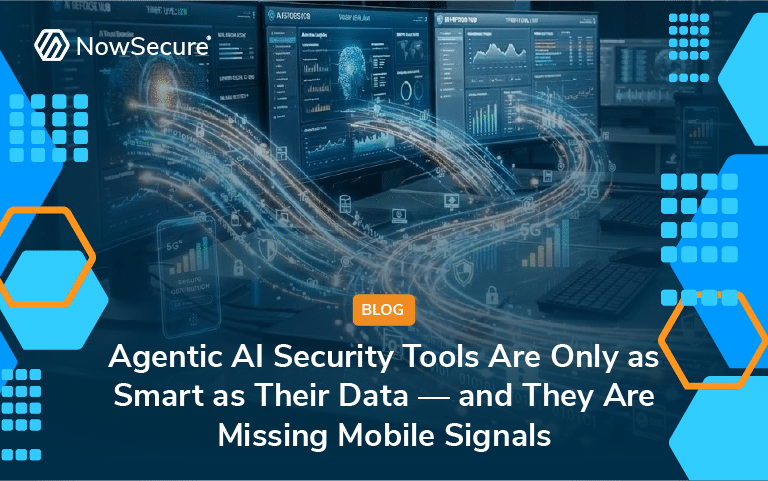
AI security platforms rely on telemetry to detect threats and correlate risk, but still lack visibility into mobile application behavior — one of the fastest-growing sources of security signals.
In brief:
TL;DR
- AI security platforms rely on telemetry to detect threats, but most lack visibility into mobile application behavior.
- Mobile apps expose enterprises to critical risks from SDK supply chains, infrastructure connections, sensitive data flows and unauthorized AI use.
- Security vendors can extend their platforms by integrating mobile application risk intelligence to close this visibility gap.
AI security platforms analyze networks, endpoints and cloud activity. Yet many cannot see mobile app behavior that bypasses these solutions.
That limitation matters more as security vendors deploy agentic AI systems that investigate alerts and reconstruct attack paths by correlating telemetry across endpoints, networks, identity systems and cloud infrastructure.
If a behavior does not generate a signal, AI cannot analyze it.
Mobile applications generate important security telemetry such as infrastructure connections, SDK dependencies, permissions and vulnerabilities that traditional security pipelines often miss. Without visibility into those behaviors, AI-driven security analytics operate with incomplete intelligence.
What Are Mobile Security Signals?
Security platforms detect threats by analyzing security signals — observable indicators of activity or risk across systems.
Mobile applications generate their own signals, including:
- domains and APIs the app communicates with
- embedded SDK components and libraries
- permissions requested from the device
- data flows to third-party infrastructure
- vulnerabilities discovered in the compiled application
Traditional telemetry systems collect signals from servers, endpoints and networks. Mobile signals originate inside the application itself.
Observing those signals requires analyzing the compiled mobile binary and its runtime behavior on a device, not just infrastructure logs.
AI security platforms can only analyze the signals they see — and most still lack visibility into what mobile applications actually do.
Why Mobile Apps Create a Security Visibility Gap
Mobile applications operate outside many traditional monitoring layers.
Mobile apps sit between the user device and the services they connect to, acting as a gateway to enterprise APIs, third-party infrastructure and embedded SDK components.
Security tools often observe the network or backend services. The mobile application layer remains opaque.
Inside the app several security-relevant behaviors occur:
- SDK components execute third-party code
- permissions grant access to device capabilities
- application logic controls data collection
- libraries initiate network connections
These behaviors generate telemetry about how the application interacts with infrastructure, services and user data.
Large-scale analysis of mobile apps illustrates how significant this gap can be. Many mobile apps embed dozens of third-party SDKs, dramatically expanding the mobile software supply chain.
NowSecure testing has also found that 85% of mobile apps contain at least one security flaw and 70% have the potential to leak personal data.For industries that depend heavily on mobile apps — banking, healthcare, retail and digital services — these signals directly affect fraud prevention, privacy protection and service availability.
Example Attack Path: A Vulnerable SDK
Consider a mobile banking application that integrates a third-party analytics SDK that contains a vulnerability in its network communication layer.
Inside the mobile application:
- The SDK collects device identifiers and usage telemetry.
- The SDK transmits that data to an external analytics infrastructure domain.
- The vulnerable library exposes sensitive data in transit.
- An attacker intercepts or manipulates the communication channel.
From a traditional security perspective:
- network monitoring tools observe outbound connections
- endpoint security tools observe device activity
- identity systems log authentication events
However these tools cannot determine which component inside the mobile application initiated the traffic or why the connection exists. Only analysis of the compiled mobile binary reveals the root cause: the vulnerable SDK embedded in the app.
Mobile Risk Also Enters Through the Release Pipeline
Mobile security risk often enters through the application release pipeline.
Mobile apps typically pass through a build process that includes:
- dependency management for SDKs and libraries
- automated packaging of the application bundle
- signing and distribution through app stores
During this process new SDK versions, configuration changes or advertising libraries may enter the application package.
Traditional DevSecOps tooling often scans source repositories but does not analyze the final compiled mobile binary submitted to the app store. Effective mobile application security testing analyzes the compiled application itself to identify vulnerabilities, risky SDKs and insecure data flows before release.
To close this gap, mobile DevSecOps programs should test:
- the final compiled mobile binary produced by CI/CD pipelines
- Third-party SDKs and libraries bundled during build packaging
- runtime behavior and data flows on real devices
Extending AI Security Platforms with Mobile App Intelligence
AI security systems rely on large datasets to detect patterns and correlate risk.
Mobile application intelligence provides structured telemetry describing how apps behave in production environments.
Security vendors can use these mobile intelligence signals to extend their platforms with visibility into mobile application behavior, helping enterprise customers identify vulnerable SDKs, unexpected infrastructure connections and risky mobile applications across their environments.
Examples of mobile intelligence signals include:
- application risk scores
- infrastructure connections and domains
- embedded SDK dependencies
- vulnerability findings
- permission usage patterns
These signals allow AI-driven platforms to correlate mobile behavior with endpoint, network and cloud telemetry.NowSecure recently introduced the Agentic AI Data Partner Program (ADP), which makes mobile application risk intelligence available to security vendors and AI platforms. This approach is modeled on existing successful integrations with companies like BitSight, iVerify and Jamf, demonstrating the flexibility and power of NowSecure data for third-party risk and AI-driven threat queries.
Why Mobile App Intelligence Matters for AI Governance
Mobile apps increasingly integrate artificial intelligence services through APIs and SDKs. Organizations implementing AI governance programs must understand how applications interact with those services and what data they transmit.
Mobile application intelligence helps security teams identify these interactions and evaluate potential exposure.
Key Takeaways
- AI security platforms rely on signals to detect threats and correlate risk
- Mobile apps generate signals traditional telemetry often misses
- SDK supply chains, infrastructure connections and vulnerabilities create mobile risk
- DevSecOps pipelines must test compiled mobile binaries before release
- AI security analytics require mobile application intelligence to understand the full attack surface
Conclusion
AI security platforms can only analyze the signals they see.
Mobile applications now sit at the center of how users authenticate, transact and access enterprise services, yet many security platforms still lack visibility into how those apps behave.
As agentic AI security systems mature, integrating mobile application intelligence will become essential for understanding risk across the full software ecosystem.
To learn how to identify and reduce mobile application risk across your environment, contact NowSecure or request a demo.
FAQ
Why do AI security platforms need mobile app intelligence?
Mobile apps generate security signals such as infrastructure connections, SDK dependencies, vulnerabilities and data flows that traditional telemetry systems often miss.
Why do traditional AppSec tools miss mobile risk?
Most AppSec tools analyze source code or infrastructure logs. Mobile apps run as compiled binaries on user devices, which means critical behaviors only appear in the compiled application and runtime environment.
Mobile applications generate security signals that traditional telemetry systems rarely capture. Infrastructure connections, SDK supply chains, permission usage, vulnerabilities and data flows all originate inside the mobile application layer.
Without visibility into those behaviors, AI-driven security analytics cannot fully correlate risk across endpoints, networks, identity systems and cloud infrastructure.
Mobile app intelligence adds a missing telemetry layer that helps security platforms analyze risk originating inside mobile applications